📌 TOPINDIATOURS Update ai: Elon Musk doubles down on Colossus supercomputer as xAI
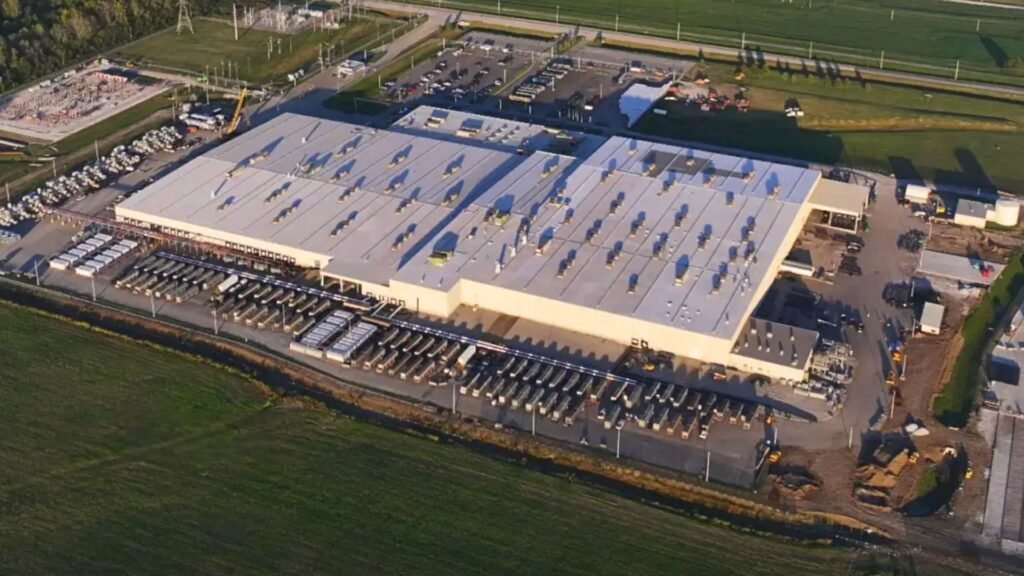
xAI has acquired a third building to expand the infrastructure behind its flagship Colossus supercomputer, a move that would push the company’s artificial intelligence training capacity toward nearly two gigawatts of compute power.
Musk said the newly acquired building is called “MACROHARDRR,” a name he mentioned in his X post on Dec. 30 without revealing its exact location. The expansion is aimed at boosting xAI’s ability to train larger and more advanced AI models, as the company seeks to compete more directly with established players such as OpenAI and Anthropic. xAI’s Memphis-based supercomputer cluster, known as Colossus, has been described by Musk as the largest in the world.
According to reports, the third building is a large warehouse planned for an area outside Memphis, near Southaven, Mississippi. This new facility is intended to become an additional data center supporting both the existing Colossus facility and the nearby Colossus 2 site, which is still under construction. The Information reported that xAI plans to begin converting the newly purchased warehouse into a data center in 2026.
The scale of the buildout is significant. xAI is planning to expand Colossus to eventually house at least one million graphics processing units, a level of compute capacity that places the project among the most ambitious AI training efforts underway. Musk has previously said that Colossus 2 alone could house around 550,000 Nvidia chips, with total costs running into tens of billions of dollars.
Powering a multi-gigawatt AI system
Reaching nearly two gigawatts of compute power would make the Colossus complex one of the most energy-intensive AI facilities in the world. According to Musk, such capacity would require electricity comparable to that used by roughly 1.5 million U.S. homes. To meet this demand, xAI is building its own energy infrastructure, including a natural gas power plant near the Colossus sites, along with access to other power sources, as reported by The Information.
The heavy energy requirements have drawn scrutiny from environmental groups and residents. An earlier July 2025 investigation by the Tennessee Lookout reported that the Colossus facility was operating 33 methane-powered gas turbines despite holding permits for only 15 at the time. The report said the supercomputer facility is located in a predominantly Black, low-income Memphis community with historically high levels of pollution-related illness.
At that time, it was estimated that Colossus drew enough electricity to power approximately 100,000 homes. Tennessee state Representative Justin J. Pearson also noted that emissions from the methane gas turbines could increase local smog levels by 30% to 60%, releasing pollutants such as nitrogen oxides and formaldehyde, which are linked to respiratory and cardiovascular disease.
Environmental concerns and mitigation efforts
xAI has acknowledged the scale of its environmental footprint and is pursuing mitigation measures. According to the information provided, the company is moving ahead with an $80 million wastewater treatment center designed to allow the reuse of about 13 million gallons of water per day, reducing dependence on local drinking water supplies for cooling.
Despite these steps, concerns persist among activists and residents in both Memphis and Southaven, particularly as the latest expansion was announced months after the Tennessee Lookout investigation. Critics have questioned whether rapid, multi-gigawatt AI development could worsen existing environmental and public health burdens in surrounding communities.
Founded in 2023, xAI is Musk’s direct challenge to leading AI developers, with its Grok chatbot tightly integrated into the X platform for real-time access to information. With the acquisition of a third building and a clear plan towards multi-gigawatt compute capacity, Musk is signaling that xAI’s aggressive expansion strategy is continuing, even as debates over cost, power consumption, and sustainability grow louder.
🔗 Sumber: interestingengineering.com
📌 TOPINDIATOURS Hot ai: Body lotion additive nearly doubles aircraft anti-icing fl
Researchers at the University of York have found a low-cost yet highly effective way to improve the performance of anti-icing fluids used for aircraft.
Low-molecular-weight-gelators (LMWGs) – molecules that are used to thicken everyday products like lotions and adhesives- could soon be used to prevent ice formation on aircraft, a recent research study has shown.
Ice formation during flight is a major safety concern for pilots and aircraft manufacturers. Even a thin layer of ice can increase weight and disrupt airflow, pushing engines to work harder. At times, it can block engine inlets or sensors, disrupting flight operations.
In worst-case scenarios, ice formation changes the wing’s profile, increasing drag and reducing lift. This can result in a failed takeoff or even the aircraft stalling mid-climb. This is why the aviation industry continually seeks to improve methods to prevent ice formation on aircraft.
What are the current methods?
Currently, the airlines use different grades of fluids to combat ice formation on the aircraft. Classified as Type I to Type IV, these fluids also have different roles. For instance, Type I fluid is a deicing fluid that removes ice already formed on the aircraft.
Typically, a low-viscosity mix of glycol and water, a Type I fluid melts and washes away the ice. However, it cannot prevent new ice formation. That’s the job of anti-icing fluids, classified as Types II through IV, that can form a preventive coating on the aircraft surface.
However, anti-icing fluids are only effective for a short period, typically no more than 70 minutes. This means that in cold weather, aircraft require frequent anti-icing treatments, which increase operational costs. The time between the application of the anti-icing treatment and its loss of ability to prevent ice formation is referred to as the holdover time.
Researchers at the University of York teamed up with Kilfrost, a provider of anti-icing fluids to the aviation industry at large, to increase the holdover time and found the solution in LMWGs.
How do LMWGs help?
Anti-icing fluids contain polymers that can form protective coatings on aircraft, helping prevent ice formation. However, although expensive, these polymers cannot provide long holdover times. The research team sought ways to increase holdover times without significantly increasing costs and found a viable solution in LMWGs.
Used in everyday solutions like adhesives and lotions, LMWGs are inexpensive but are also needed in very small amounts. Adding just 0.25 grams of LMWGs to three types of anti-icing fluids, the researchers tested the fluids in the laboratory at 23°F (minus 5 degrees Celsius).
A fine mist of water was sprayed onto the samples to determine their holdover times. The performance of LMWG with added anti-icing fluids was almost twice that without them, nearly doubling holdover time to 120 minutes.
To simulate real-world conditions, the researchers then put shear forces on the fluid coatings, similar to those experienced by an aircraft in flight. While the LMWG-containing fluid remained as a gel at rest, it broke down as the strain increased.
Since LMWGs can be easily blended into anti-icing fluids, they can be quickly incorporated as a real-world solution without significantly increasing deployment costs.
The research findings were published in the journal Langmuir.
🔗 Sumber: interestingengineering.com
🤖 Catatan TOPINDIATOURS
Artikel ini adalah rangkuman otomatis dari beberapa sumber terpercaya. Kami pilih topik yang sedang tren agar kamu selalu update tanpa ketinggalan.
✅ Update berikutnya dalam 30 menit — tema random menanti!