📌 TOPINDIATOURS Breaking ai: German firm trials first 100% hydrogen marine engine
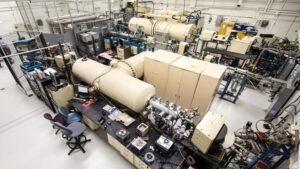
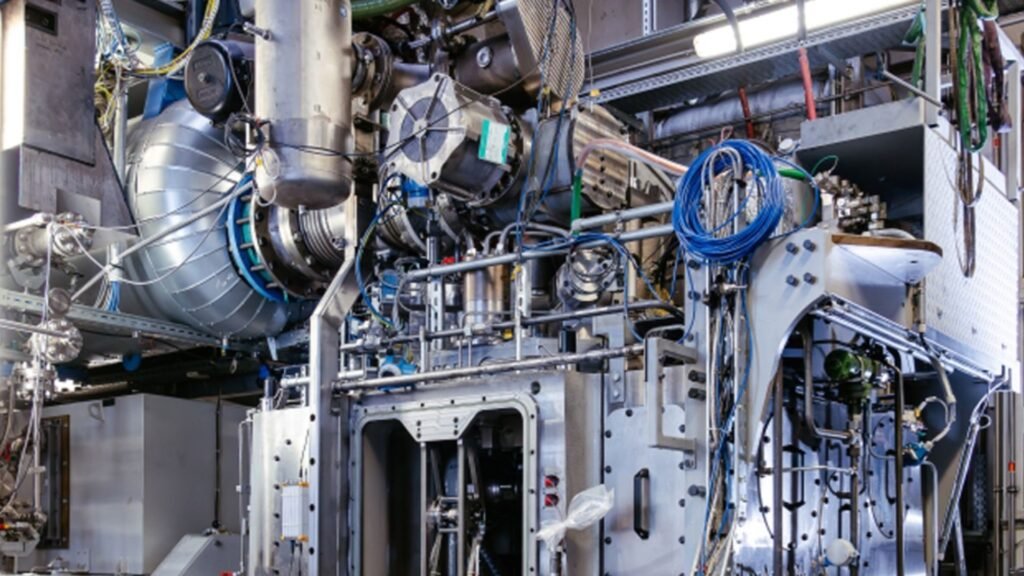
Germany-based Everllence has upgraded a research-engine test bench at its Augsburg site to enable hydrogen combustion, specifically testing a single-cylinder 35/44DF H2 engine on 100% hydrogen.
“The first 100% H2 engine, a single-cylinder 35/44DF H2 engine, was successfully commissioned at Everllence’s Augsburg site in late-2025 and has already run on 100% hydrogen,” said the company.
This development was completed under the “HydroPoLEn” project, which is a partnership with industry leaders and research institutes supported by funding from the German Federal Ministry for Economic Affairs and Energy.
The project designed and tested a combustion process and mechanical components specifically for hydrogen operation. This newly developed process increases power density during hydrogen use.
Alongside the engine tests, a dedicated hydrogen infrastructure was established at the Augsburg site to support current research and future technology development.
Re-engineering engine architectures
The project focused on re-engineering engine architectures to manage the properties of hydrogen. The team developed a combustion process that increases power density while creating mechanical components optimized for hydrogen operation.
Additionally, the new hydrogen supply infrastructure in Augsburg establishes the site as a functional hub for alternative fuel research.
The HydroPoLEn consortium includes several technical and industrial partners. Everllence serves as the lead developer and engine manufacturer.
WTZ provides engine testing and thermodynamics expertise, while the NMA at the Technical University of Munich conducts academic research and modeling.
Tenneco provides component manufacturing and thermal management, and Carnival Maritime acts as an associated partner representing the requirements of the cruise industry.
Viable option for decarbonizing marine mobility
Project leaders noted that while the technical hurdles of safety systems and component adaptation have been addressed, the technology is in the early stages of market readiness.
Dr. Cornelius Wagner, HydroPoLEn Project Manager, stated that these developments indicate that hydrogen is becoming a viable option for the decarbonization of passenger ships.
Dr. Matthias Auer, Head of Performance and Emissions at Everllence, noted that hydrogen will play a role alongside ammonia and methanol in future maritime propulsion.
He stated that because no single technology will be optimal for all applications, companies must evaluate multiple fuel options.
Dr. Alexander Knafl, Senior Vice President R&D Four-Stroke, added that the hydrogen engine serves as a foundation for future marine mobility.
Broad industry trends
Everllence stated that this development is part of its ongoing work toward propulsion systems for maritime applications.
The maritime sector continues to evaluate various fuels to meet environmental targets, as hydrogen, ammonia, and methanol remain the primary candidates to replace traditional heavy fuel oils.
In a separate advancement for hydrogen power, researchers at the Karlsruhe Institute of Technology (KIT) in Germany have set a runtime record for a compressorless gas turbine.
While previous tests lasted only a fraction of a second due to the risk of melting combustion chambers, the team recently ran the turbine for 303 seconds.
This surpasses a 250-second record previously held by NASA. The KIT researchers also used the hydrogen-powered turbine to produce electricity, establishing a path for future carbon-free energy sources.
🔗 Sumber: interestingengineering.com
📌 TOPINDIATOURS Hot ai: US-built nuclear reactor simulator to power cheaper micror
Scientists in the US have recently developed a powerful new digital test bed, the Griffin reactor physics modelling and simulation software, that could significantly speed up the development of advanced nuclear reactors.
The novel tool should enable accurate predictions of reactor performance across various designs. It was jointly created by the Idaho National Laboratory (INL) and the Argonne National Laboratory (ANL).
According to the joint research team, the platform is set to enable engineers to simulate complex reactor behavior with unprecedented detail. It should also cut the need for expensive prototypes and long testing cycles.
“Griffin can simulate a lot of the processes that are happening in a real-world operating reactor,” Changho Lee, PhD, a principal nuclear engineer at Argonne, said. “It’s closer to a real-life scenario where high temperatures, pressures and neutron flux in the harsh environment of a reactor core are causing changes to fuels and reactor materials.”
Exploring the new platform
Used by nuclear energy researchers, regulators, and industry, Griffin is a 2025 R&D 100 Award–winning software. It simulates the core processes inside an operating reactor, including neutron transport, heat flow, fuel channels, and material stresses.
“It’s cheaper and safer to run, allowing you to explore numerous scenarios,” Lee emphasized. It is reportedly developed on the award-winning MOOSE platform (Multiphysics Object Oriented Simulation Environment).
Its design allows it to couple with other MOOSE-based codes for thermal fluids, thermochemistry, and thermo-mechanics. “It is built with the ability to interact with other physics within the MOOSE framework or outside of that framework as well,” Josh Hanophy, PhD, a radiation transport methods development researcher at INL, said.
The system models a nuclear reactor by merging neutronics, thermal hydraulics, structural mechanics, materials behavior, and fuel performance in one platform. This is made possible by the linear Boltzmann transport equation solver, which captures complex radiation behavior within the reactor core.
A digital reactor twin
Griffin tracks changes in isotopes to help evaluate how fuel will evolve and how the reactor will perform. It also predicts neutron interactions using nuclear data and machine learning, and accelerates simulations, while allowing researchers to choose between fast, lower-fidelity models and slower, high-fidelity ones.
Due to its technical depth and flexibility across reactor types, the system captures physical changes such as density shifts, material aging, dimensional changes, and isotopic or chemical variations. Because of this, it can analyze designs for pebble bed, prismatic high-temperature, molten-salt, sodium- and lead-cooled reactors, as well as microreactors and other advanced concepts.
Griffin has also been used to help design nuclear systems for NASA, thus proving its value for space and Moon missions. These include nuclear thermal propulsion rockets, microreactors for fission surface power on the Moon and Mars, and devices that supply heat and electricity for spacecraft and remote operations.
For example, when it comes to DARPA’s Demonstration Rocket for Agile Cislunar Operations (DRACO), Griffin helped model a tightly coupled physics system inside a nuclear rocket, which could one day shrink travel times across the solar system.
The platform’s flexibility further extends to fusion research, where it can simulate neutron interactions within breeding blankets that generate tritium fuel. This is a crucial component for future fusion plants.
“Griffin aims to revolutionize nuclear energy by combining advanced computational power with deep scientific understanding, leading the way to a safer, more efficient energy future,” Javier Ortensi, PhD, a former research and development scientist at INL, concluded in a press release.
🔗 Sumber: interestingengineering.com
🤖 Catatan TOPINDIATOURS
Artikel ini adalah rangkuman otomatis dari beberapa sumber terpercaya. Kami pilih topik yang sedang tren agar kamu selalu update tanpa ketinggalan.
✅ Update berikutnya dalam 30 menit — tema random menanti!