
📌 TOPINDIATOURS Breaking ai: 7,000-year-old Chinchorro mummies represent a culture
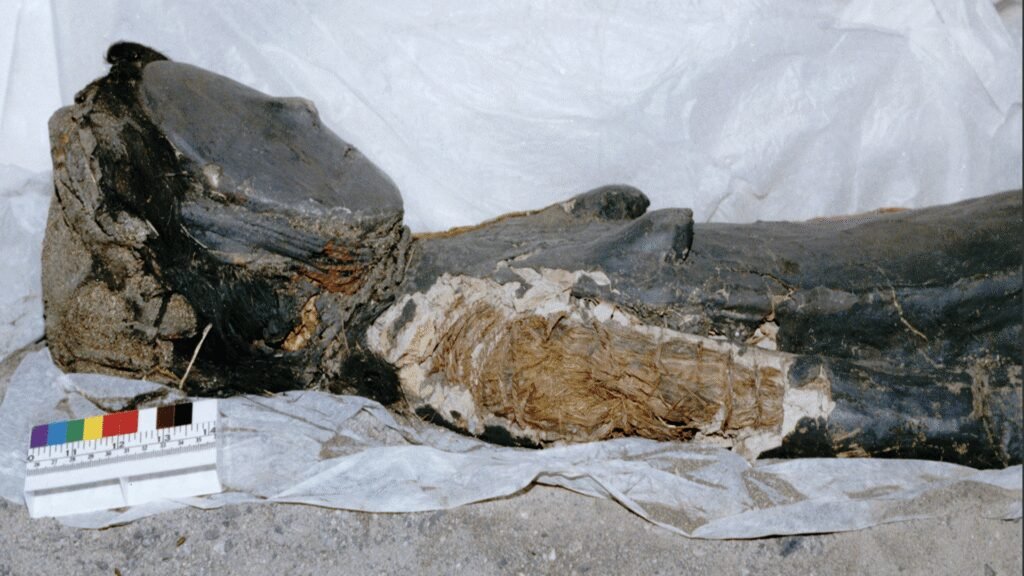
Long before the Egyptians, an ancient Chilean culture practiced an unusual form of mummification: they turned their dead into dolls.
Whenever death struck this ancient community, the Chinchorro engaged in an act of grieving that essentially became art.
According to a recent study in Cambridge University Press, this fascinating group first honored the separation inherent in death. Lead author Dr. Bernardo Arriaza proposed that they ritualistically set the body aside, then departed to gather raw materials like pigments, clay, and reeds.
Going so far as to remove the flesh and extract major organs, they used these gathered ingredients to stuff and paint the body. They placed a wig upon the head and modeled the facial features and genitals. This process, as Archaeology Mag described, was nothing short of “intensive and creative,” turning the deceased into literal works of art.
Beyond being an innovative form of mortuary practice, the study suggests this elaborate ritual likely stemmed from a high rate of infant mortality; it began as an outpouring of grief, showcasing the profound role creativity plays in processing loss.
Grief becomes art
The Chinchorro began mummifying their dead well before the Egyptians immortalized the practice. However, the Chinchorro merited their own specific term, “artificial mummification,” because they refashioned their deceased into dolls or a unique form of statuary.
As the earliest Chinchorro mummies were children from the Camarones Valley, researchers discovered that their environment contained high levels of arsenic. This toxicity affected their reproductive health, resulting in miscarriages and high infant mortality rates, Phys continues.
Dr. Arriaza believes that this complex act of tearing bodies apart, gutting them, and putting them back together again was born from deep-seated grief. In recent years, researchers have argued that the Chinchorro weren’t practicing funerary rites, but rather “art therapy.”
“It has been a slow process of sorting through my thoughts to explain the Chinchorro’s early, complex, and creative treatment of the dead—children in particular,” Dr. Arriaza stated in Phys.
“The transformed body became a canvas for expressing emotion, and a place where these ancient people may have found emotional healing and comfort. They venerated their departed as visual icons.”
A culture marked by loss
Over time, they adopted this coping mechanism as a central rite of their culture. As Archaeology Mag stated,they symbolically kept the dead within the social world of the living, almost mimicking the “grief bots” that have made headlines as of late: AI replicas of the deceased that could almost carry on living.
“Grief is a universal emotion that connects us all,” as per the study, “…bringing people together and making social bonds stronger.” The Chinchorro suffered an unspeakable loss, as their offspring perished, which impacted how they treated the dead over the course of their existence. To weave in the enduring power of art: in processing complex emotions, a study of Andean grief suggests that these rituals resulted in particularly strong bonds between parent and child.
Like a recent archaeological discovery in Korea, which highlighted a period where that culture suffered incredible loss and destruction, the Chinchorro turned a moment of tragedy into an artistic achievement. The study of these Chinchorro mummies presents a group of people who processed their grief so profoundly that it became a work of art.
🔗 Sumber: interestingengineering.com
📌 TOPINDIATOURS Update ai: Japan could produce nuclear weapons in three years with
Japan could develop its own nuclear weapons within 3 years if it wanted to, experts claim. This would be possible because Japan already possesses the raw materials and expertise to do so.
According to reports, Japan has large stockpiles of separated plutonium and runs one of the world’s most advanced civil nuclear industries. In fact, in 2014, Japan already possessed 9 tons of plutonium, which would be enough to create around 5,000 nuclear bombs.
It also had around 1.2 tons of enriched uranium. “Japan already has the technical capability, and has had it since the 1980s,” an unnamed Japanese official told NBC News. The same official told NBC News that Japan could likely build weapons very quickly once the political decision to proceed was given.
The nation also possesses missile, space-launch, and precision engineering capabilities, and has an elite scientific and industrial capacity.
In nuclear terms, Japan is a classic “latent nuclear power,” meaning it is a country that doesn’t have nuclear weapons but could acquire them quickly. The “under three years” estimate includes things like designing a basic warhead and mating it to an existing delivery system.
Japan could go nuclear very quickly
Such development would also include conducting a limited (possibly untested) deployment. It is important to note that this claim is not about building a Cold War-scale arsenal, but rather about acquiring its own limited nuclear capability.
The prediction also comes after former US diplomat Henry Kissinger’s 2023 warning that Japan was “heading toward becoming a nuclear power in five years.” He also warned that the post-WW2 order in Asia is also eroding, with certain nations (like China and Russia) becoming increasingly aggressive.
Further to this prediction, Japanese Prime Minister Sanae Takaichi has also hinted at possible legal changes to Japan’s three non-nuclear principles. “Japan should possess nuclear weapons,” Takaichi told Asahi Shimbun.
That said, Japan’s Chief Cabinet Secretary Minoru Kihara has also reiterated the country’s commitment to its long-standing non-nuclear policy (no possession, no production, no introduction). On December 18, Kihara said that Japan’s nuclear policy remains unchanged.
Times are a-changing
Japan is a special case when it comes to nuclear weapons, as it is the only nation on Earth to have been affected by them. During World War 2, two of Japan’s cities, Hiroshima and Nagasaki, were obliterated by nuclear bombs dropped by the United States.
Since then, nuclear weapons have been a very emotive topic in the nation. Discussions of the potential domestic development of such weapons are, then, a huge change in mindset for Japan, albeit not a declaration of intent.
While Japan is not secretly developing them, it is a sign that significant changes are afoot in the region. Should Japan ever decide to make its own nuclear weapons, it would be a major shock for the region.
It would also likely worsen diplomatic relations with other regional powers like China, which is one of the world’s major nuclear powers. China is also very nervous about the growing Japanese military powers, given its history with Japan during World War 2.
🔗 Sumber: interestingengineering.com
🤖 Catatan TOPINDIATOURS
Artikel ini adalah rangkuman otomatis dari beberapa sumber terpercaya. Kami pilih topik yang sedang tren agar kamu selalu update tanpa ketinggalan.
✅ Update berikutnya dalam 30 menit — tema random menanti!
