📌 TOPINDIATOURS Breaking ai: 350 folklore records reveal Ireland’s infant burial g
A new study brings together folklore and archaeology to reveal the superstitions surrounding Ireland’s intriguing cillíní—burial grounds designated specifically for infants.
The “forgotten children of Ireland” were rediscovered through folklore in this unusual study, which intertwines cultural narratives with the landscape.
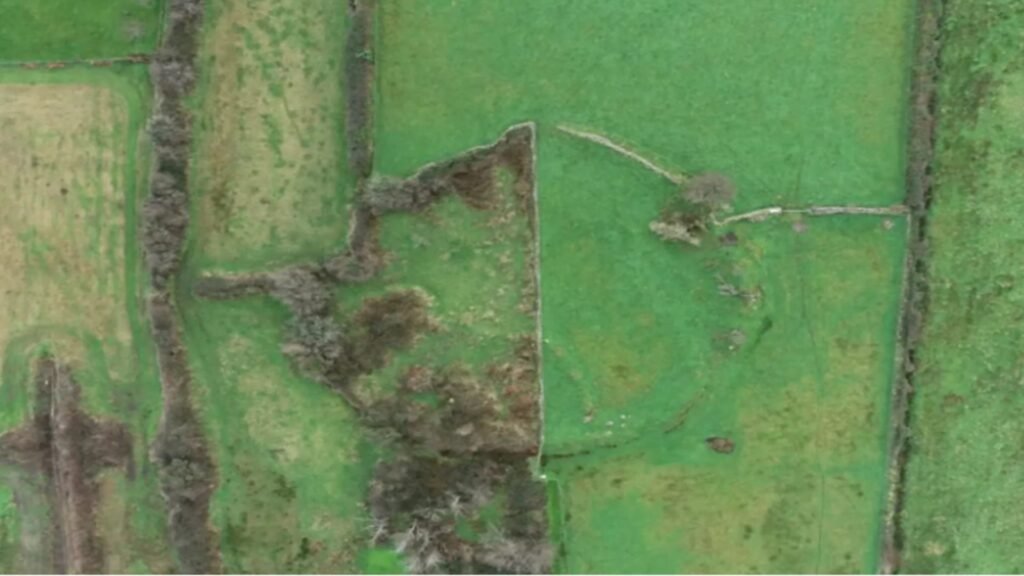
Dr. Marion Dowd, a lecturer in archaeology at Atlantic Technological University (ATU), cross-referenced 350 folklore accounts with archaeological records to identify 11 cillíní and 16 previously unknown burial grounds across Ireland for the first time.
Cillíní were reserved for babies who were stillborn, miscarried, or died at birth without having been baptized. According to Dr. Dowd’s study, published in the Journal of Irish Archaeology, the tragic early loss of life inspired rich supernatural traditions that have largely been forgotten, revealing a fascinating aspect of Irish culture.
“This research reconnects Ireland’s rich folklore with its physical archaeological heritage, ensuring that the places in our landscape associated with the unbaptized are not lost to time,” Dr. Dowd stated in a press release.
Recovering Ireland’s youngest and lost
After examining the folklore accounts and archaeological records, Dr. Dowd rediscovered these burial grounds across counties including Kerry, Mayo, Donegal, Galway, Clare, Cork, Louth, Sligo, Waterford, Longford, Meath, Monaghan, Tipperary, and Wexford, as noted in the press release.
Archaeology Magazine reports that Dr. Dowd documented notable sites at Lisheen na bPáistí (County Sligo) and Inis na Leanbh in Kilquane (County Kerry), as well as near holy wells in Waterford and within ringforts in Meath. Many of these sites had never been recorded before.
Beyond the number of cillíní and burial sites uncovered, the practices surrounding these unconsecrated grounds reveal a complex emotional landscape marked by grief, shame, and trauma, according to the press release. Dr. Dowd termed it “an archaeology of emotion.”
The folklore reflects the supernatural beliefs that arose from these heartbreaks, including tales of “supernatural lights” and traditions such as the “stray sod” and “hungry sod,” which were thought to punish those who disturbed graves.
Additionally, cillíní designated for baby boys and girls were kept separate, each having their own burial grounds. “Other accounts describe folk cures for sick children linked with visits to these burial places,” Archaeology Magazine notes.
As these babies were unbaptized, their cemeteries often sank into obscurity, and integrating folklore into heritage protection is vital. Although they died young, they were not considered with the same respect afforded to baptized individuals. This research highlights how modern development, agriculture, and neglect pose threats to these cillíní.
However, since folklore is integral to Irish culture, these beliefs, customs, and stories are protected under Ireland’s heritage legislation through UNESCO’s Intangible Cultural Heritage Convention (2015).
Folklore integrated into heritage protection
The findings underscore the importance of incorporating oral traditions into heritage protection, as folklore contains crucial information for locating these sites. Beyond the legends, they provide valuable data, according to Archaeology Mag.
Local communities are encouraged to assist in identifying and preserving these sites, as their involvement will aid archaeologists in safeguarding this piece of Irish history and illuminating the lives of a demographic that deserves to be remembered, as emphasized in the press release.
Dr. Dowd’s work was highlighted in Bright Minds, Big Impact, showcasing ATU’s research excellence and the individuals driving meaningful change, as noted by The Archaeologist.
🔗 Sumber: interestingengineering.com
📌 TOPINDIATOURS Eksklusif ai: GLP-1s Are an Environmental Catastrophe Hari Ini
Ozempic and other GLP-1 agonist drugs have become an enormously popular way to lose weight. And with generic, much cheaper versions of the medications on the horizon, their use could soon grow even further.
But apart from being a clinically proven way to shed pounds — at least temporarily — along with a whole constellation of other health benefits, the drugs also turn out to be a major strain on the environment.
As detailed in a new paper published in the journal Nature Sustainability, researchers from the University of Melbourne investigated how the process of producing peptides — short chains of amino acids that aren’t just used for GLP-1 agonists, but plenty of other drugs and treatments as well — releases huge amounts of organic solvents and other plastic byproducts that don’t break down on their own in nature.
Fortunately, the researchers say they’ve come up with a much more environmentally friendly procedure that could make producing peptide-based treatments far more sustainable in the long-run.
So far, they’ve been manufactured using a technique called “solid phase peptide synthesis,” or SPPS, which anchors the first amino acid building block to a synthetic resin, such as polystyrene beads. Toxic solvents — including dimethylformamide, a component of paint strippers — are then used to add each amino acid one by one, which can then leak into the water supply.
The scale of the issue is considerable. As the lead author of the Nature Sustainability paper and University of Melbourne chemistry professor John Wade wrote in a piece about his research, the annual production of semaglutide, the active ingredient in popular weight loss drugs such as Ozempic, is currently generating upwards of 123 million pounds of toxic solvent waste. And that’s just one of more than 80 peptide-based drugs on the market.
The materials involved are also expensive and difficult to get rid of, thanks to tight environmental regulations.
“Why are we still making life-saving medicines using chemical processes that produce mountains of toxic waste, and could water — the cleanest and most familiar solvent of all — offer a way out?” Wade asked rhetorically.
In response, the researcher and his colleagues came up with a water-based solution to synthesize peptides. By pairing amino acids with specific salts, they found they could overcome limitations associated with SPPS, allowing them to dissolve them in water “at high concentrations while remaining fully functional.”
An activating agent combined with a biodegradable material could allow for “efficient peptide synthesis entirely in water,” the professor argued.
It remains to be seen whether the process can be scaled up industrially, but given the wide proliferation of GLP-1 agonists, it’s critical to investigate ways of making manufacturing processes more sustainable.
“What began as a shared concern among three long-time international collaborators has become an exciting technology with the potential to reshape how some of the most important medicines of our time are made,” Wade wrote. “Cleanly, responsibly and ready for the future.”
More on weight loss drugs: People Who Go Off GLP-1s Are Experiencing a Sudden and Terrible Hunger
The post GLP-1s Are an Environmental Catastrophe appeared first on Futurism.
🔗 Sumber: futurism.com
🤖 Catatan TOPINDIATOURS
Artikel ini adalah rangkuman otomatis dari beberapa sumber terpercaya. Kami pilih topik yang sedang tren agar kamu selalu update tanpa ketinggalan.
✅ Update berikutnya dalam 30 menit — tema random menanti!