📌 TOPINDIATOURS Hot ai: Survivors of Swiss ski resort fire treated with skin grown
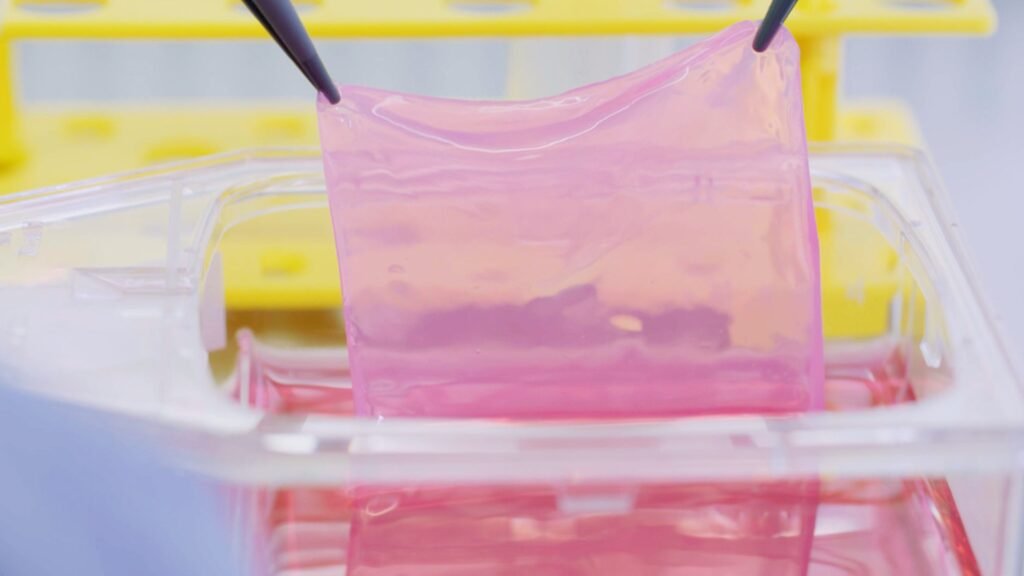
Survivors of Switzerland’s devastating Crans-Montana fire disaster who suffered severe burns are being treated with advanced lab-grown skin grafts, developed using their own cells to improve healing and recovery.
The blaze at the Le Constellation bar in the ski-resort town broke out during New Year celebrations on January 1, 2026. It claimed the lives of 40 people and injured another 119.
Between 80 and 100 survivors suffered severe burns, many covering more than 60 percent of their bodies. Such extensive injuries pose complex medical challenges and require years of surgeries and rehabilitation.
Now, doctors are turning to a novel solution to help some of the most seriously injured patients transferred to Zurich. The approach, developed through decades of research, uses living skin grown from the patients’ own cells.
Treating severe burns
The skin graft, which behaves like natural human skin, was developed by scientists at the University of Zurich (UZH). One of the researchers, biotechnologist Daniela Marino, PhD, later co-founded the spin-off company Cutiss in 2017, to bring the solution, known as denovoSkin, into clinical use.
Unlike traditional split-thickness grafts, which rely on thin layers of donated skin and often result in tight scarring, the denovoSkin graft is elastic and capable of growing with the patient.
“We developed a living human skin tissue graft that is cultivated in the laboratory from a small skin biopsy the size of a post-stamp taken from the patient,” Marino, now Cutiss’ CEO, said. “The key point is that it is a personalized bilayer graft.”
Credit: CUTISS
Because the graft is made entirely from a patient’s own cells, the risk of rejection is effectively eliminated. This, in turn, reduces complications during healing.
“So far, long-term clinical data in both burns and reconstructive surgery, such as scar revisions and plastic surgery, show that the bilayer skin grafts safely close wounds and spare healthy skin for the patients while improving scar quality when compared to standard of care,” Marino revealed.
The technology now allows the company to produce several lab-grown skin grafts of up to eight square inches (50 square centimeters) each, within a four-week timeframe.
Hope for survivors
The University Hospital Zurich confirmed that, in selected cases, biopsies from the Crans-Montana patients were sent to Cutiss to produce denovoSkin grafts. As of January 2, 13 patients are being treated at the hospital.
According to Cutiss, long-term clinical data shows that the bilayer graft safely closes wounds, reduces the need for additional donor skin and improves scar quality compared with current standard care.
Credit: CUTISS
The treatment is now in late-stage clinical development. A Phase 3 trial launched in spring 2025 is enrolling adult and adolescent burn patients across 20 burn centers in eight European countries and Switzerland, including Zurich.
At the same time, the final-stage trial aims to confirm the treatment’s safety and effectiveness on a larger scale. This is a key step toward regulatory approval and wider clinical use. Phase 2 data have already been published.
“Our product is an advanced therapy, and now we need Phase-3 data before we can proceed with the full regulatory approval process in different geographies, including Switzerland,” Marino concluded in a press release.
🔗 Sumber: interestingengineering.com
📌 TOPINDIATOURS Breaking ai: Salesforce rolls out new Slackbot AI agent as it batt
Salesforce on Tuesday launched an entirely rebuilt version of Slackbot, the company's workplace assistant, transforming it from a simple notification tool into what executives describe as a fully powered AI agent capable of searching enterprise data, drafting documents, and taking action on behalf of employees.
The new Slackbot, now generally available to Business+ and Enterprise+ customers, is Salesforce's most aggressive move yet to position Slack at the center of the emerging "agentic AI" movement — where software agents work alongside humans to complete complex tasks. The launch comes as Salesforce attempts to convince investors that artificial intelligence will bolster its products rather than render them obsolete.
"Slackbot isn't just another copilot or AI assistant," said Parker Harris, Salesforce co-founder and Slack's chief technology officer, in an exclusive interview with Salesforce. "It's the front door to the agentic enterprise, powered by Salesforce."
From tricycle to Porsche: Salesforce rebuilt Slackbot from the ground up
Harris was blunt about what distinguishes the new Slackbot from its predecessor: "The old Slackbot was, you know, a little tricycle, and the new Slackbot is like, you know, a Porsche."
The original Slackbot, which has existed since Slack's early days, performed basic algorithmic tasks — reminding users to add colleagues to documents, suggesting channel archives, and delivering simple notifications. The new version runs on an entirely different architecture built around a large language model and sophisticated search capabilities that can access Salesforce records, Google Drive files, calendar data, and years of Slack conversations.
"It's two different things," Harris explained. "The old Slackbot was algorithmic and fairly simple. The new Slackbot is brand new — it's based around an LLM and a very robust search engine, and connections to third-party search engines, third-party enterprise data."
Salesforce chose to retain the Slackbot brand despite the fundamental technical overhaul. "People know what Slackbot is, and so we wanted to carry that forward," Harris said.
Why Anthropic's Claude powers the new Slackbot — and which AI models could come next
The new Slackbot runs on Claude, Anthropic's large language model, a choice driven partly by compliance requirements. Slack's commercial service operates under FedRAMP Moderate certification to serve U.S. federal government customers, and Harris said Anthropic was "the only provider that could give us a compliant LLM" when Slack began building the new system.
But that exclusivity won't last. "We are, this year, going to support additional providers," Harris said. "We have a great relationship with Google. Gemini is incredible — performance is great, cost is great. So we're going to use Gemini for some things." He added that OpenAI remains a possibility as well.
Harris echoed Salesforce CEO Marc Benioff's view that large language models are becoming commoditized: "You've heard Marc talk about LLMs are commodities, that they're democratized. I call them CPUs."
On the sensitive question of training data, Harris was unequivocal: Salesforce does not train any models on customer data. "Models don't have any sort of security," he explained. "If we trained it on some confidential conversation that you and I have, I don't want Carolyn to know — if I train it into the LLM, there is no way for me to say you get to see the answer, but Carolyn doesn't."
Inside Salesforce's internal experiment: 80,000 employees tested Slackbot with striking results
Salesforce has been testing the new Slackbot internally for months, rolling it out to all 80,000 employees. According to Ryan Gavin, Slack's chief marketing officer, the results have been striking: "It's the fastest adopted product in Salesforce history."
Internal data shows that two-thirds of Salesforce employees have tried the new Slackbot, with 80% of those users continuing to use it regularly. Internal satisfaction rates reached 96% — the highest for any AI feature Slack has shipped. Employees report saving between two and 20 hours per week.
The adoption happened largely organically. "I think it was about five days, and a Canvas was developed by our employees called 'The Most Stealable Slackbot Prompts,'" Gavin said. "People just started adding to it organically. I think it's up to 250-plus prompts that are in this Canvas right now."
Kate Crotty, a principal UX researcher at Salesforce, found that 73% of internal adoption was driven by social sharing rather than top-down mandates. "Everybody is there to help each other learn and communicate hacks," she said.
How Slackbot transforms scattered enterprise data into executive-ready insights
During a product demonstration, Amy Bauer, Slack's product experience designer, showed how Slackbot can synthesize information across multiple sources. In one example, she asked Slackbot to analyze customer feedback from a pilot program, upload an image of a usage dashboard, and have Slackbot correlate the qualitative and quantitative data.
"This is where Slackbot really earns its keep for me," Bauer explained. "What it's doing is not just simply reading the image — it's actually looking at the image and comparing it to the insight it just generated for me."
Slackbot can then query Salesforce to find enterprise accounts with open deals that might be good candidates for early access, creating what Bauer called "a really great justification and plan to move forward." Finally, it can synthesize all that information into a Canvas — Slack's collaborative document format — and find calendar availability among stakeholders to schedule a review meeting.
"Up until this point, we have been working in a one-to-one capacity with Slackbot," Bauer said. "But one of the benefits that I can do now is take this insight and have it generate this into a Canvas, a shared workspace where I can iterate on it, refine it with Slackbot, or share it out with my team."
Rob Seaman, Slack's chief product officer, said the Canvas creation demonstrates where the product is heading: "This is making a tool call internally to Slack Canvas to actually write, effectively, a shared document. But it signals where we're going with Slackbot — we're eventually going to be adding in additional third-party tool calls."
MrBeast's company became a Slackbot guinea pig—and employees say they're saving 90 minutes a day
Among Salesforce's pilot customers is Beast Industries, the parent company of YouTube star MrBeast. Luis Madrigal, the company's chief information officer, joined the launch announcement to describe his experience.
"As somebody who has rolled out enterprise technologies for over two decades now, this was practically one of the easiest," Madrigal …
Konten dipersingkat otomatis.
🔗 Sumber: venturebeat.com
🤖 Catatan TOPINDIATOURS
Artikel ini adalah rangkuman otomatis dari beberapa sumber terpercaya. Kami pilih topik yang sedang tren agar kamu selalu update tanpa ketinggalan.
✅ Update berikutnya dalam 30 menit — tema random menanti!