
📌 TOPINDIATOURS Update ai: AI goes orbital as 6G research turns satellites into ed
As the world races toward sixth-generation mobile networks, the real battleground may not be on Earth at all, it may be in orbit.
With 6G commercialization expected around 2030, researchers are already rethinking how artificial intelligence will operate at a global scale.
The International Telecommunication Union (ITU) has identified future 6G use cases such as “integrated artificial intelligence (AI) and communication” and “ubiquitous connectivity,” signaling a shift toward networks that do more than just transmit data.
One major hurdle remains: delivering seamless AI services across vast, remote, and underserved regions.
Terrestrial networks alone may not be enough to meet these demands, especially as AI workloads grow heavier and more latency-sensitive.
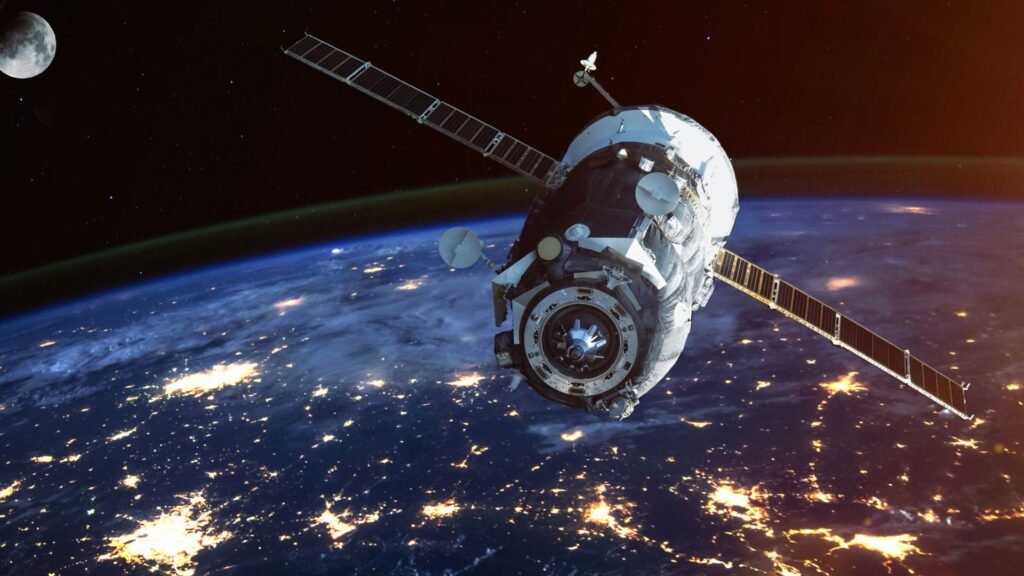
A new study proposes an answer that stretches far beyond the ground. Researchers from the University of Hong Kong and Xidian University have introduced a framework that merges edge AI with space–ground integrated networks (SGINs), turning satellites into both communication hubs and computing servers.
Their approach, called space–ground fluid AI, aims to overcome the challenges posed by fast-moving satellites and limited space–ground link capacity—two issues that have long restricted the use of AI in orbital systems.
AI flows like water
Inspired by the way water flows seamlessly across boundaries, the space–ground fluid AI framework allows AI models and data to move continuously between satellites and ground stations.
The researchers describe this as extending traditional two-dimensional edge AI architectures into space.
The framework rests on three core techniques: fluid learning, fluid inference, and fluid model downloading. Each is designed to keep AI services running smoothly despite the constraints of satellite mobility and intermittent connectivity.
Fluid learning tackles long training times by introducing an infrastructure-free federated learning scheme.
Instead of relying on costly inter-satellite links or dense ground stations, the system uses satellite motion itself to mix and spread model parameters across regions.
By doing so, satellite movement shifts from being a limitation to becoming an advantage, enabling faster convergence and higher test accuracy.
Fluid inference, meanwhile, focuses on optimizing real-time AI decision-making. Neural networks are split into cascading sub-models distributed across satellites and ground nodes.
This allows inference tasks to adapt dynamically to available computing resources and link quality, using early exiting strategies to balance latency and accuracy.
Satellites as AI servers
The third pillar, fluid model downloading, addresses how AI models are delivered efficiently to end users on the ground. Instead of storing entire models on satellites, only selected parameter blocks are cached.
These blocks can migrate through inter-satellite links, improving cache hit rates and reducing download delays.
Multicasting reusable model parameters further boosts efficiency, allowing multiple devices to receive the same AI components simultaneously while conserving spectrum resources.
Deploying AI in space, however, comes with its own set of challenges. Satellites operate under harsh radiation conditions and rely on limited, intermittent power supplies.
To address this, the researchers highlight the importance of radiation-hardened hardware, fault-tolerant computing, and energy-aware task scheduling.
Looking ahead, the team outlines future research directions such as energy-efficient fluid AI, low-latency fluid AI, and secure fluid AI, each targeting critical tradeoffs between performance, reliability, and security.
By exploiting predictable satellite trajectories and repeated orbital motion, space–ground fluid AI could play a central role in delivering truly global edge intelligence in the 6G era, as detailed in the journal Engineering.
🔗 Sumber: interestingengineering.com
📌 TOPINDIATOURS Update ai: Elon Musk’s Starship Explosion Endangered Hundreds of A
On January 16, SpaceX conceded that the latest prototype of its enormous Starship spacecraft had “experienced a rapid unscheduled disassembly during its ascent burn” — a tongue-in-cheek admission that the massive rocket had exploded mid-flight.
Countless videos circulating online showed a massive stream of reentering pieces of the Starship rocket blazing across the evening sky over the West Indian islands of Turks and Caicos. It was a dazzling sight to behold as the destruction streaked across the sky, like something from science fiction.
“Success is uncertain, but entertainment is guaranteed!” a gleeful Musk wrote at the time.
But it wasn’t all fun and games. Residents of Turks and Caicos, for instance, soon found scraps of burnt rubber and other rocket pieces littering the Caribbean islands’ otherwise pristine beaches.
The incident, which was almost perfectly repeated on February 24, even forced airlines to quickly adjust their flight paths to avoid the terrifying field of burning metal.
And now, eleven months later, the Wall Street Journal has obtained Federal Aviation Administration documents revealing that three aircraft — a JetBlue passenger plane, an Iberia Airlines flight, and a private jet, carrying a total of 450 people total — were in far greater danger than SpaceX and government officials let on at the time.
The reporting also highlights the possibility that SpaceX CEO Elon Musk’s extremely close relationship and ample influence in Washington, DC, may have played a role in FAA officials looking the other way as the company’s Starship rockets kept exploding during tests.
While all three planes landed safely on January 16, if any one of them had been struck by a piece of Starship debris, it could’ve been a major disaster.
Air traffic controllers had to scramble to ensure the planes were far away from the debris field, leading to an increase in their workload, a “potential extreme safety risk,” according to an FAA report obtained by the WSJ.
Air traffic controllers were left bewildered.
“I don’t know if you guys were advised, but there was a rocket launch and apparently the rocket exploded and there was debris in the area between us and Miami which basically covers our entire airspace,” one controller in the area said. “So I need to keep all the aircraft clear of that area because of the debris.”
SpaceX failed to inform the agency through its official hotline that its Starship had exploded, per the documents. The hotline is designed to alert officials at the FAA so they can act in time and keep pilots away from danger.
Previously determined no-fly debris zones were activated four minutes after SpaceX lost contact with its Starship vehicle. The Elon Musk-led firm didn’t confirm with the FAA that it had lost the craft until 15 minutes later.
SpaceX has since denied that anybody was ever in danger in an excoriating statement posted to Musk’s social media platform X.
“Yet another misleading ‘story’ the company’s official account wrote, echoing the voice of its mercurial CEO, who has an extremely troubled relationship with the news industry. “The reporters were clearly spoon-fed incomplete and misleading information from detractors with ulterior motives.”
“SpaceX is committed to responsibly using airspace during launches and reentries, prioritizing public safety to protect people on the ground, at sea, and in the air,” the statement reads.
The FAA suspended a safety review in August, even though its own policies call for addressing safety risks, per the WSJ, arguing that safety recommendations were already being implemented.
Meanwhile, SpaceX continues to make improvements to its Starship super heavy launch platform through an unusual iterative design approach that has already led to over a dozen massive explosions.
How future tests will fare — or if the public will ever be in danger — remains to be seen.
The company’s most recent, eleventh full-scale test took place on October 13. The rocket harmlessly splashed down in the Indian Ocean after successfully reaching orbit.
A new and even more powerful version is expected to launch sometime early next year.
More on Starship: Elon Says His New Rocket Is as Important as the Origin of Life Itself
The post Elon Musk’s Starship Explosion Endangered Hundreds of Airline Passengers appeared first on Futurism.
🔗 Sumber: futurism.com
🤖 Catatan TOPINDIATOURS
Artikel ini adalah rangkuman otomatis dari beberapa sumber terpercaya. Kami pilih topik yang sedang tren agar kamu selalu update tanpa ketinggalan.
✅ Update berikutnya dalam 30 menit — tema random menanti!
